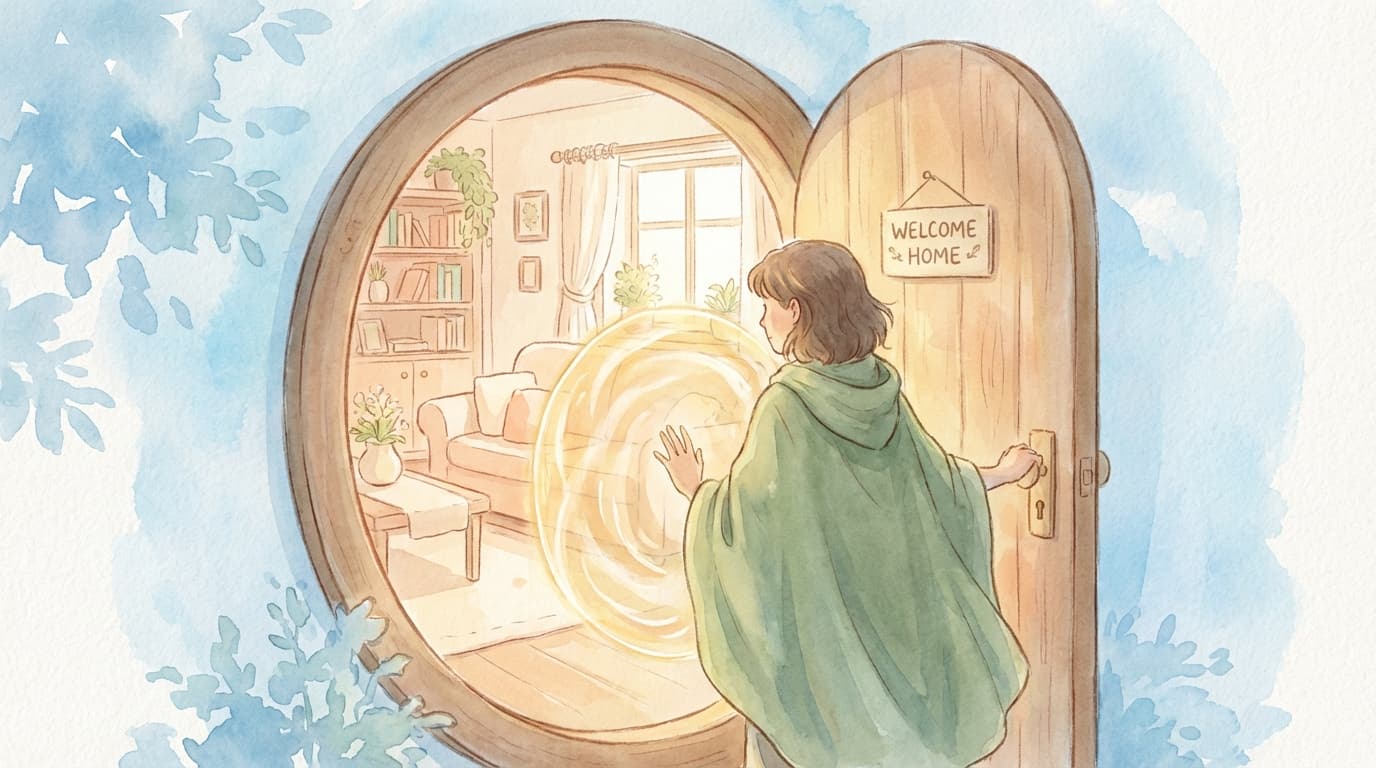
The Homecoming Trigger: Building Your Somatic Shield
Do you ever step into your childhood home and instantly feel like an anxious 15-year-old?
You walk through the front door. You take off your shoes. Suddenly, your chest tightens. You feel small. You lose your ability to speak up for yourself, reverting to habits of people-pleasing or silence that you thought you’d left behind years ago.
It is a confusing and frustrating experience. You have built a life, a career, and a sense of self as an adult. Yet, within minutes of being in that environment, that identity evaporates.
If this resonates with you, please take a deep breath. This is not a sign of weakness. It is not a lack of maturity or personal failure.
This is a neurological phenomenon called Emotional Regression.
The Neuroscience of Regression
When exposed to familiar family environments or childhood dynamics, your brain does something fascinating and protective. Your amygdala—the part of the brain responsible for detecting threats—scans the environment based on past data, not present reality.
To your nervous system, the smell of your childhood home or the tone of a parent’s voice is not just a memory; it is a cue linked to survival mechanisms from years ago. If you learned that staying safe meant fawning (appeasing others) or freezing (shutting down), your amygdala will automatically trigger those old responses.
It happens in a split second, often before your conscious mind even realizes it. You are biologically wired to prioritize survival over logic.
The Cost of Absorbing Emotional Weight
When we are in this regressed state, we lose our boundaries. We become porous.
Without a somatic shield, you likely absorb the emotional weight of your family. You feel their stress as your own. You react to their moods. You fall into old patterns of conflict that feel circular and exhausting.
This keeps your cortisol levels high and your nervous system in a state of dysregulation. You leave the visit feeling drained, anxious, or perhaps carrying a heaviness that takes days to shake off.
Building Your Somatic Shield
You cannot change your family dynamics overnight. You cannot force them to understand your nervous system. But you can change how your system responds to them.
We call this practice Building a Somatic Shield.
A somatic shield is not a wall you put up to shut people out. It is an energetic boundary that allows you to be present without absorbing the emotional charge of the room. It is a way of signaling to your vagus nerve: "I am safe. I am an adult. I have agency."
The "Adult Anchor" Technique
The most effective tool for this is the "Adult Anchor." This is a somatic action step you can take before, during, and after triggering interactions.
Here is how to practice it:
1. Select Your Anchor Object
Choose a physical object that represents your current independence and your adult life. This could be your own house keys, a piece of jewelry you bought yourself, or even a smooth stone in your pocket. It must be something tangible that is solely yours.
2. The Pre-Entry Protocol
Before you step into a triggering situation or answer a difficult question, physically touch your anchor object. Feel its texture, its temperature, its weight.
3. The Somatic Remind
Take a deep breath and, internally or externally, remind your nervous system:
"I am an adult. I have my own safe space. I can choose to step away when I need to."
4. Regulate and Respond
This simple action—touch + breath + affirmation—re-engages your prefrontal cortex. It brings you out of the regressed "child" state and back into your adult "regulator" state.
A Gentle Reminder
It takes practice to build a shield that holds. You may still feel the pull of old patterns. That is okay.
If you find yourself feeling overwhelmed, if the racing thoughts start to spiral, or if the anxiety of the environment feels too loud, remember that you have tools to reset. You do not have to stay in the dysregulation.
Sometimes, the strongest thing you can do is pause. Give your nervous system permission to downshift.
Your nervous system deserves safety, even when you are far from home.
If the anxiety of family visits leaves your mind racing long after you have left, try our free audio tool. It is designed to help you find your baseline again.