Kintsugi for the Soul: Why Healing Doesn't Mean Going Back to Normal
There's a quiet expectation society places on us after loss. We're told to "move forward," to "find closure," and ultimately to return to who we were before. But neuroscience and an ancient Japanese art form reveal a profound truth: healing was never meant to erase the cracks.
The Myth of Returning to "Normal"
If you've been waiting to feel like your old self again, you may be holding yourself to an impossible standard. The person who existed before your loss didn't carry this experience. They didn't know this kind of heartache. They hadn't learned what you now understand about the fragility and preciousness of life.
Your nervous system has fundamentally shifted. Grief isn't just an emotional experience—it's a somatic one that rewires your brain. Your amygdala, responsible for processing threats and emotional memories, has been activated in ways it never was before. Your cortisol patterns have changed. Your capacity to regulate your nervous system has been tested and transformed.
Neuroplasticity—the brain's ability to reorganize itself by forming new neural connections—means you cannot simply "undo" what grief has done. But here's what science tells us: you don't need to.
The Neuroscience of Integrated Trauma
When we experience significant loss, our brains create new neural pathways to process the experience. These aren't "damaged" pathways—they're evidence of adaptation, of learning, of deepening. Just as a muscle grows stronger through resistance, your nervous system develops new capacities through the intense work of grieving.
Research into post-traumatic growth shows that many people report positive psychological changes after struggling with challenging life circumstances. These include a greater appreciation for life, deeper relationships, increased personal strength, and a more developed sense of spirituality.
The key difference between those who experience growth and those who remain stuck? Integration rather than avoidance.
Kintsugi: The Art of Honorable Scars
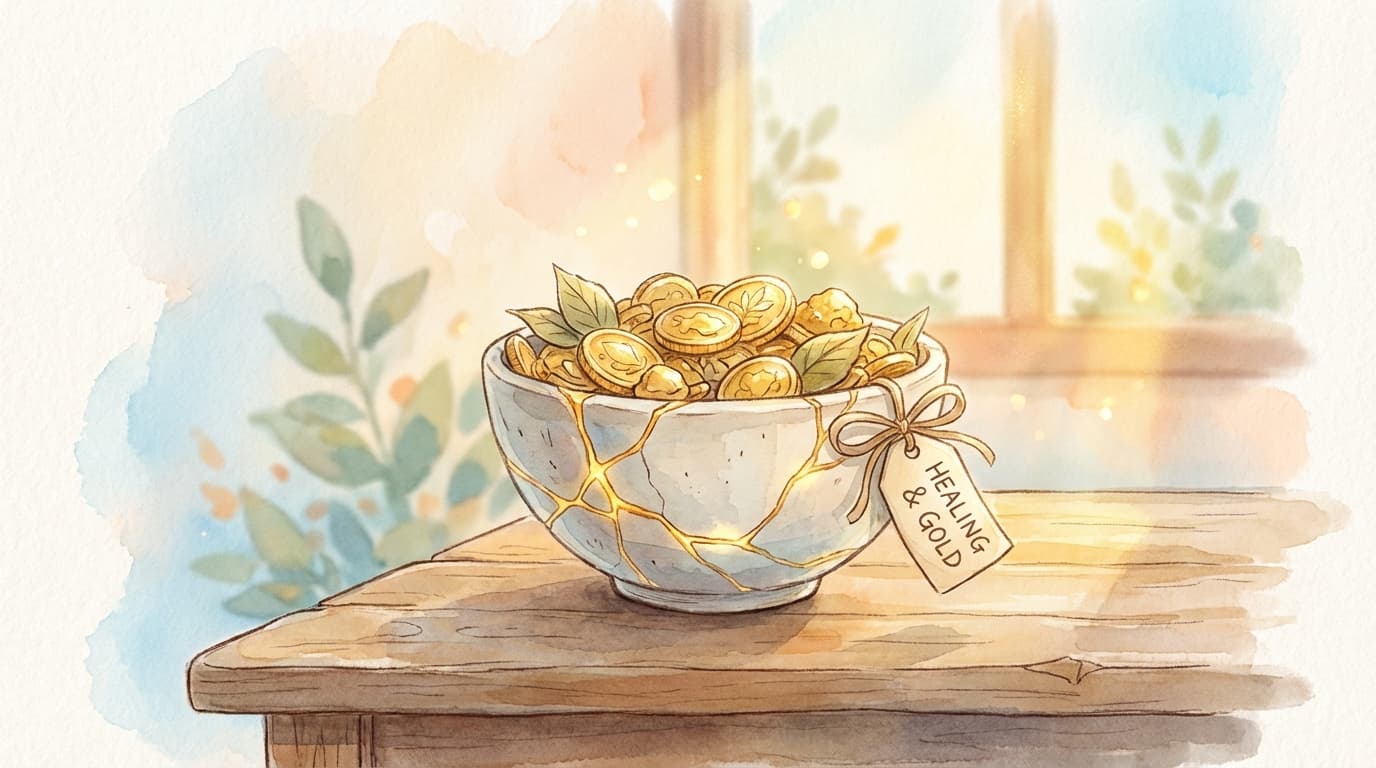
In 15th century Japan, a shogun broke his favorite tea bowl and sent it back to China for repair. When it returned with ugly metal staples, Japanese craftsmen sought a more beautiful solution. They began mixing lacquer with powdered gold, silver, or platinum to repair broken pottery, highlighting rather than hiding the cracks.
This art form, known as Kintsugi (golden joinery), became a philosophy: breakage and repair are treated as part of the history of an object, rather than something to disguise.
The bowl is not merely restored—it becomes more valuable, more beautiful, more unique because of what it has endured and how it has been transformed.
Your nervous system is like that bowl. The cracks—the sleepless nights, the unexpected waves of sadness, the moments when grief catches your breath—are not signs of incomplete healing. They are evidence of love, of connection, of a heart that knew how to care deeply.
The Exhausting Pursuit of Perfection
When we believe healing means returning to our pre-loss state, we're essentially chasing an illusion of perfection. We're trying to erase the evidence of our pain rather than honoring it as part of our story.
This pursuit is exhausting. It requires constant vigilance against any reminder of our loss. It means suppressing emotions when they arise. It creates a state of chronic dysregulation in your nervous system, as your body fights against the natural processing of grief.
Instead, imagine what it would feel like to stop fighting against your cracks. To acknowledge them with the same care and precision as a Kintsugi artist. To fill them not with gold, but with somatic awareness, with presence, with gentleness toward yourself.
The Somatic Practice of Honoring Your Scars
True healing isn't about erasing pain—it's about creating the conditions for your nervous system to integrate it safely. Here's how you can begin:
1. Notice Without Judgment
When grief arises, instead of immediately trying to "fix" it, pause. Where do you feel it in your body? Your chest? Your throat? Your stomach? Simply notice the sensation without labeling it as "bad" or trying to make it go away.
This practice of somatic awareness signals to your nervous system that it's safe to feel, that you can hold this experience without being overwhelmed by it. Over time, this reduces activation in the amygdala and strengthens your ventral vagal state—that place of safety and connection.
2. Breathe Into the Cracks
Once you've identified where grief lives in your body, try sending gentle breath into that area. Imagine each inhale bringing softness, each exhale releasing tension.
This isn't about breathing grief away. It's about befriending it, about letting your body know that even in its broken places, it is worthy of care.
3. Name What's True
So often, we try to talk ourselves out of our pain. "I shouldn't still be feeling this," we think. "It's been X months."
Try instead to simply name what's true, without evaluation. "My chest feels heavy this morning." "I'm missing them more than usual today." "I feel angry about what happened."
Naming brings the prefrontal cortex online, the part of your brain responsible for emotional regulation. It creates distance between you and the emotion, allowing you to observe it rather than be swept away by it.
4. Choose Your Gold
Kintsugi artists choose gold to highlight cracks, but you can choose your own metaphorical filling. What would honor your experience?
Perhaps it's a commitment to living more fully because you now understand how precious life is. Maybe it's a deeper compassion for others who are grieving. It could be a new appreciation for small moments of beauty that you previously took for granted.
When grief arises, remind yourself: This crack represents how much I loved. This empty space is where something important used to be. And both deserve acknowledgment, not erasure.
From Perfection to Wholeness
The Japanese concept of wabi-sabi, closely related to Kintsugi, finds beauty in imperfection and impermanence. It suggests that nothing lasts, nothing is finished, and nothing is perfect—and that's okay.
What if, instead of seeking perfection, you sought wholeness?
Wholeness acknowledges that your grief is part of you, but it's not all of you. Wholeness makes room for both the sadness of loss and the capacity for joy. Wholeness recognizes that you can be deeply changed and still deeply you.
Your nervous system knows the way forward. It has an innate wisdom for healing that doesn't require forcing or pretending. It simply needs safety, presence, and time.
A Gentle Invitation
If you're navigating grief and feeling overwhelmed by the expectation to "move on" or "return to normal," know that there's another way. The Somatic Grief Journal was created to help you process your loss through your body, honoring both the science of neuroplasticity and the wisdom of practices like Kintsugi.
This isn't about fixing yourself. It's about meeting yourself exactly where you are, with the tools to navigate grief safely and gently.
You don't need to return to who you were. You're becoming someone new—someone who has learned, through profound experience, that even broken things can hold light. That even cracked vessels can pour out love. That there's a particular beauty in having been broken and choosing to heal anyway.
That beauty is yours. It always has been.